

The art and soul of woodworking at Tridha
“Children who learn while they are young to make practical things by hand in an artistic way, and for the benefit of others as well as for themselves, will not be strangers to life or to other people when they are older. They will be able to form their lives and their relationships in a social and artistic way, so that their lives are thereby enriched. Out of their hands can come technicians and artists who will know how to solve the problems and tasks set for us.”
It is no small feat to take a two-dimensional pencil sketch on the surface of a block of wood and work the piece into a three-dimensional object. Students are given direction and guidance along the way, but the skills are only obtained and mastered by actually doing them. Each success, or wrong turn, of the chisel, is a lesson in patience, resilience, and flexibility, qualities that support the development of problem-solving techniques and subtle thinking as well.
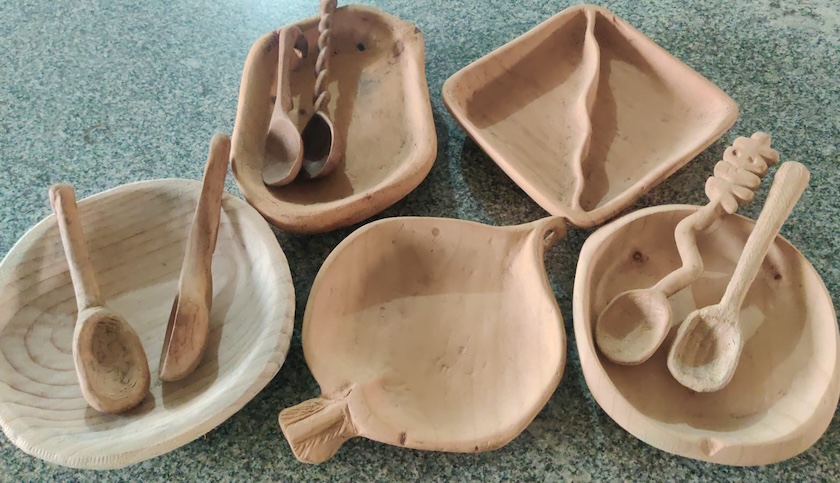
When kids are inherently prepared to use their force and willpower to overcome the physical resistance in front of them, they start woodworking in the fifth grade. Adolescents require a suitable challenge at this point in their lives to help them become resilient and gain confidence in their ability to overcome obstacles. When students finish a project, they feel a great sense of pride, competence, and satisfaction since they worked hard to build wooden spoon, plate and designed their own Totem Pole. By utilizing solely hand tools, they focus on accuracy when using them and gain hand endurance and competence. This develops the student's senses, strengthens their willpower.
Woodworking which is very unique to Waldorf curriculum is a very important and must learning to all the students as it helps the students to relate to the world around them, the materials they use, many of the senses is active during this process , the touch, the smell, the sight. Working and constantly being in touch with materials from the earth helps their feeling life and creates a bond between them and nature helping them to become a responsible individuals.
“The child must work out of his or her own will, not by following commands. Thus, we can bring children to the point where they will carve and make various objects according to their own ideas.” – Rudolf Steiner.
Woodworking classes are introduced in the Grade 5, on by the onset of puberty, during this period a lot of hormonal and physical changes are affecting the child. Woodwork offers an avenue for each child to immense themselves into a world free from the worries of their daily life – away from peer pressures. It not only makes them conscious of their “will” but also provide an opportunity for them to learn how to control it. Today, this is the most important lesson we can give our children; the ability to not act impulsively, but instead control their will and use it constructively to makes the changes they desire.
It's wonderful to hear about the resilience and enthusiasm of students in a woodworking class. Working with tools like knives and chisels requires skill, patience, and a steady hand, and it's impressive to see students embrace the challenges with a positive attitude. Woodworking is not only a craft but also a valuable learning experience that teaches patience, precision, and the joy of creating something tangible with one's hands.
The transformation from rough cuts and blisters to the smooth, refined finish achieved through sandpapering is a metaphor for the entire learning process. The visible lines and rings in the wood tell a story, showcasing the unique characteristics of each piece. This process not only instills a sense of accomplishment but also fosters a deep appreciation for the artistry of woodworking.
Moreover, the happiness and satisfaction on a student's face upon completing a project highlight the intrinsic rewards of hands-on, creative endeavors. Woodworking not only develops technical skills but also nurtures a sense of pride and achievement that goes beyond the finished product.
The collaborative nature of the woodwork class, involving both students and teachers, creates a supportive and inspiring learning environment. It's a testament to the power of experiential learning and the enduring joy derived from the craft. Such experiences contribute not only to the development of practical skills but also to the holistic growth and well-being of the individuals involved.