

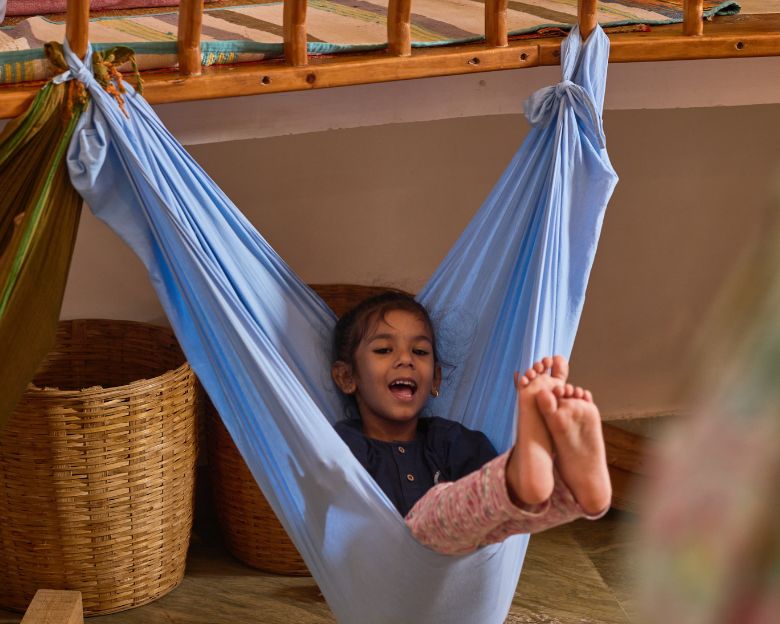
Cradle of the Early years – Part 1
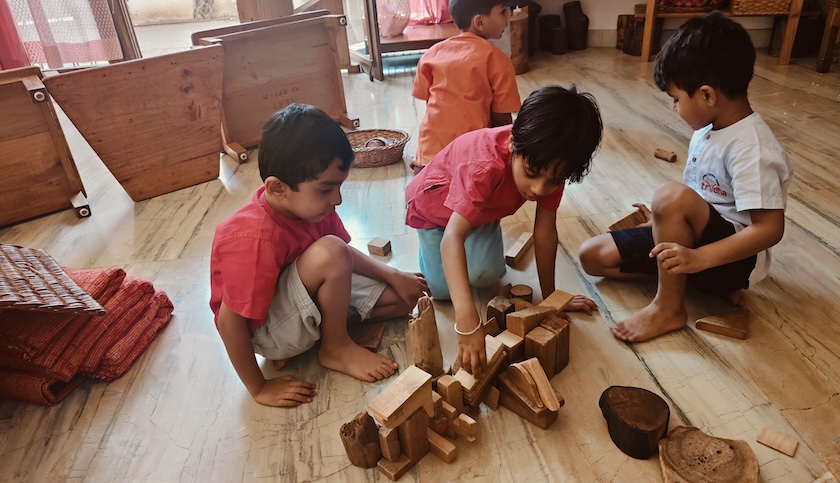
In a peaceful garden filled with whispering little flowers and chirping birds, children play and explore. Every morning as the Sun rays peep in through the branches of the bougainvillea and the petals are fresh and open; all happy children gather, and their faces are bright with excitement ready to play. They build castles and tiny fairy homes out of mud, smooth stones and sticks. Some build water pathways digging way through the mud. Laughing with joy and freedom, feeling Mother Earth under their feet. Some pretend to be animals, some crawl through the grass, some climb up the tree while some hide little treasures under the tree. As the day comes to an end and their hearts filled with magic of play, children return to their home.
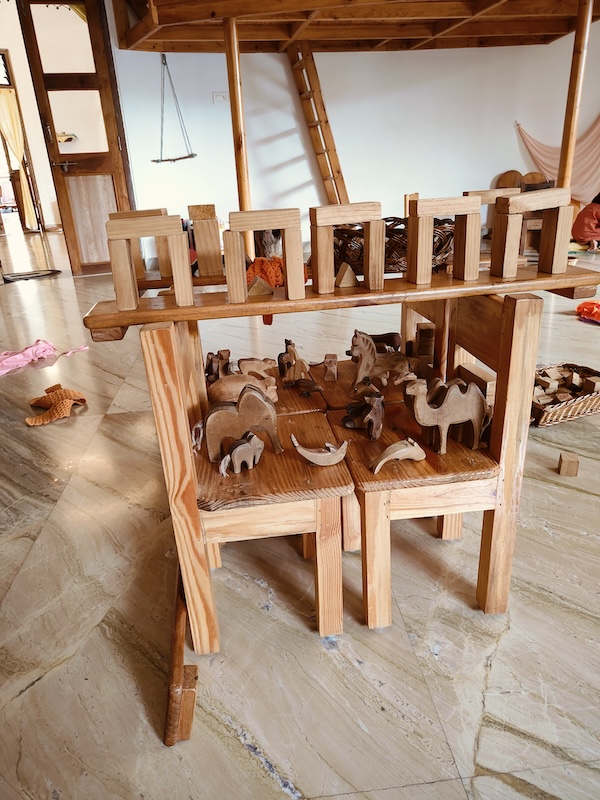
Play is the Heart of the Kindergarten, and the days are planned balancing an indoor and an outdoor Rhythm. Rudolf Steiner in his work described the young child as “Spiritual Beings”. They are a “Wholly sense organ”. They take in every impression right through their bodies. He said the first 7 years is the time where they learn through Imitation. The lower 4 senses are worked upon i.e. sense of Touch, sense of Movement, sense of Life and sense of Balance. Children are in their “Willing” stage where they are in movement and undergo physical development. Living in the moment, they make real life experiences, and our work is to offer them experiences through which they find meaning, understanding knowledge and eventually moral understanding in their later lives.
The above glimpse of children at play may transport many of us to our childhood days and these childhood forces can be a part of our lives even when we are adults. Playing with Gifts of Nature may have ample hidden life stories for many to share. Children are in a “dreamy consciousness” in the first seven years. Nothing is rushed.
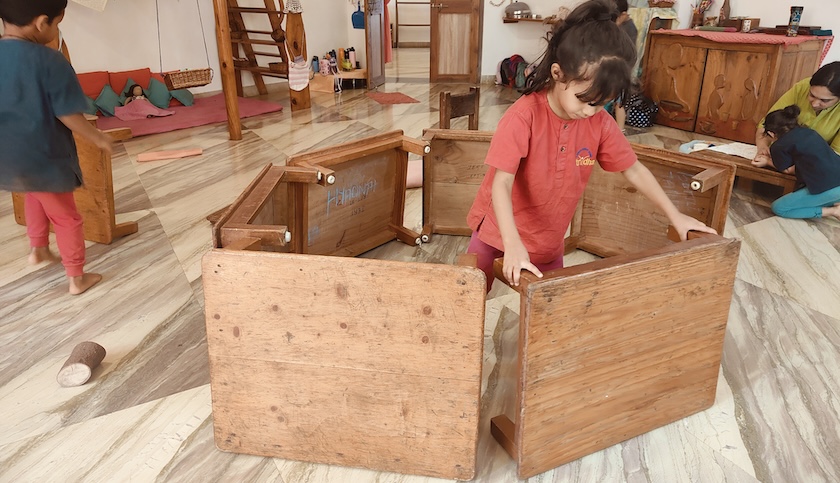
In the earlier times, most children have spent time playing outdoors and within the confines of their home too, they played with coconut shells, tamarind seeds, jackfruit seeds, marbles, shells, stones, sticks, and our mother’s sarees would become doll houses. Or for that matter they played with “Nothing”. In many homes the older child would be helping their parents in the household chores while the younger children would emulate the older sibling/ adult. A middle sibling always strikes the balance between both. Yes, now times are different. We have all sorts of help.
Caregivers at the kindergarten strive to create a home-like environment. It’s a home away from home. Children spend much time outdoors playing with “gifts of nature” making sensory experiences. Gentle laughs and murmur wafts round the corner and within the kindergarten room too, an unexpected atmosphere of calm permeates. There are handmade/natural play materials that can appeal to the child’s senses. Much of the play materials kept in the care needs inner work and preparation. That means a lot of work for the caregiver.
Rudolf Steiner believed that children who learn to make practical things by hand in an artistic way will not be strangers to life or to people when they are older. He spoke on the topic of play and the materials offered, has much value on the soul and spirit of the developing child. Playing with simple unformed materials offers them the ability to play with and to discover their place in the world. Materials need to have a calming and nurturing quality, which can be observed in the child’s play. Steiner said that the child’s play is like a preparation for many experiences to unfold. They need the time to explore and hence the play materials are not formed or fixed.
This post has been authored by Vidya Iyer, former Kindergarten Teacher and Coordinator