

Circle time – a unique form of movement
What is circle time?
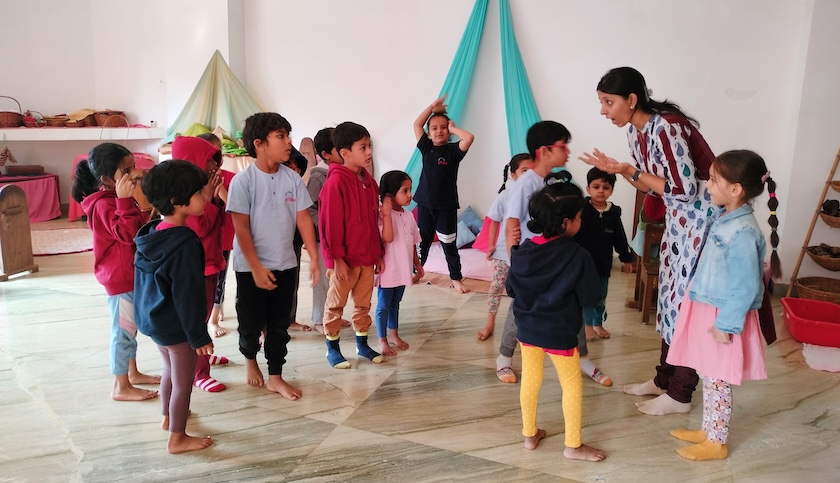
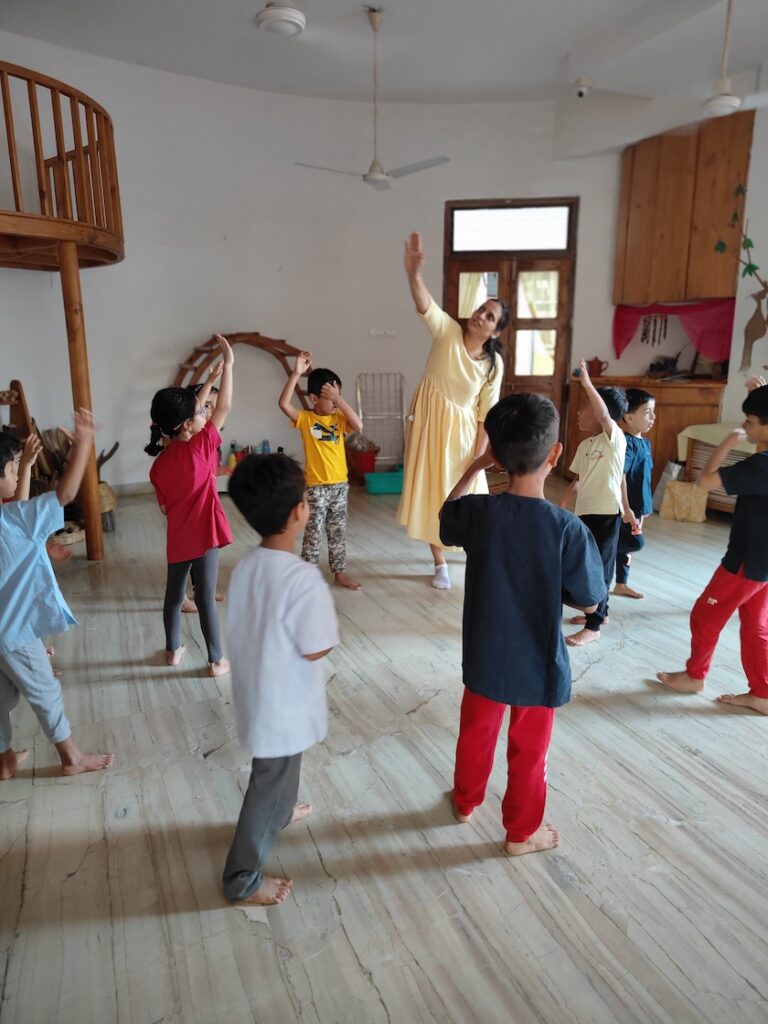
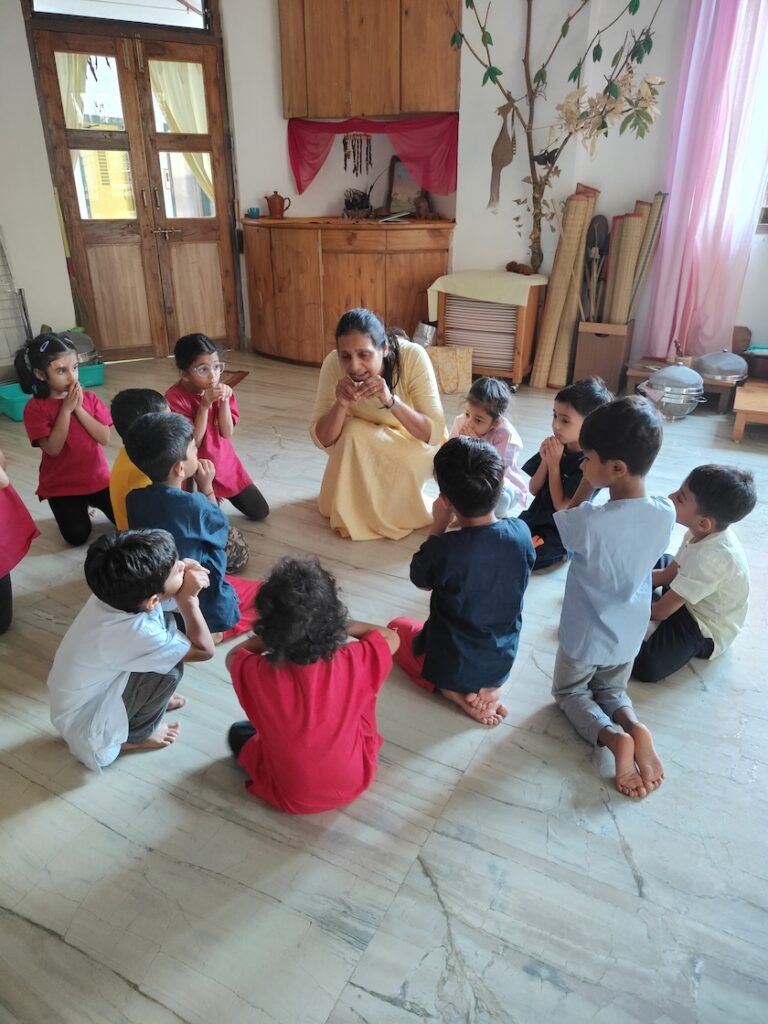
CIRCLE - when one hears the word, a basic shape is what first comes to mind. But in Steiner schools it is an unconsciously laid boundary that is led by the teacher that resembles a circle. As the Waldorf curriculum follows a consistent pattern or rhythm every day, this time of the day is called ‘circle-time’. Circle time is helmed by the teacher as the children follow a journey that is detailed with song, movement, verse & gesture.
In kindergarten, circle time feels like an imaginary journey knit with a repetitive story, the festivals that came around the year; at times expressing the season, on others, painting a picture of a works man. As the children progress to grades there is a degree of challenge and age-appropriate material is included.
You may wonder why do we engage in it?
Firstly, it’s that time of the day that connects the whole class together.
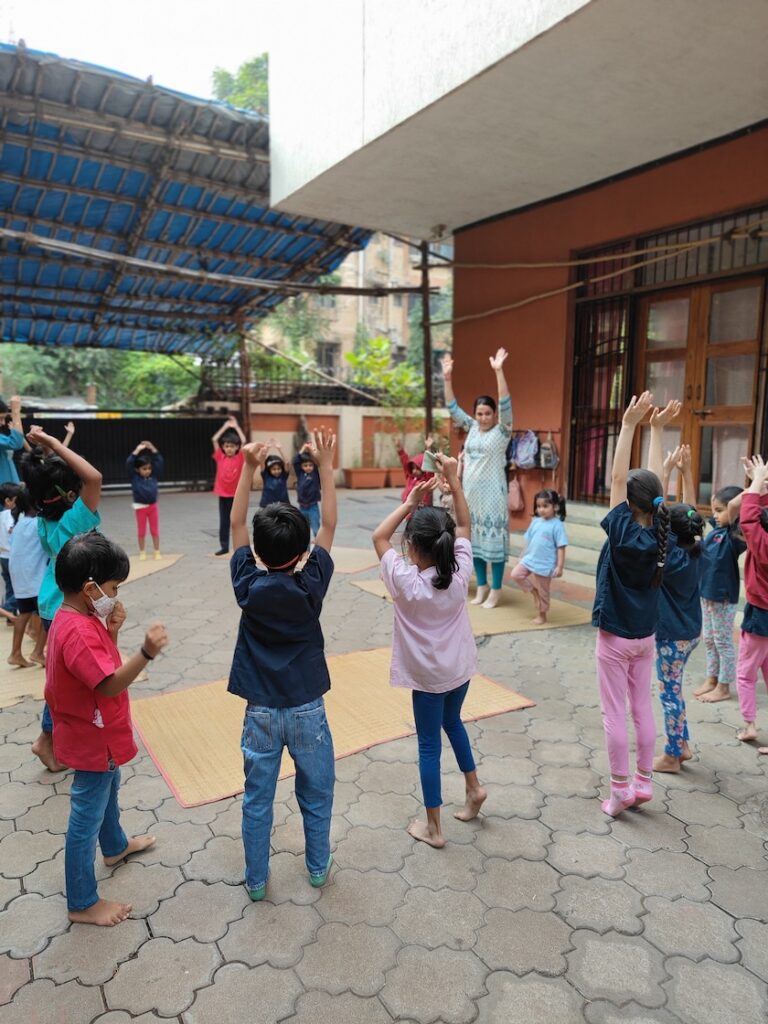
In today’s age of technology, we are moving away from traditional forms of movement. Some archetypal images that are bought in the circle strengthen these kinesthetic forms of learning. Kindergarten children in their stage of development, spend as much time as possible learning to master the use of their bodies and strengthen their sense of movement and balance. Circle time recognises this need, providing them with an opportunity to refine their fine and gross motor skills as they use their fingers dexterously, run, jump, hop, roll, and crawl in tandem. Each circle has a rhythm of its own – from having big movements then small, from being loud to soft, from being fast to slow, from being active to coming to a slow, still and quiet end. This enables children to develop small and large muscle control.
The circle is repeated at the same time every day and this repetition aids in memory and recollection and in a noninvasive way it assists in speech and language development. In grades, the kinesthetic experiences provided during circle times helps in learning math. It’s amazing to see how body memory aids in learning mathematical tables.
As Circle time is rich in images it allows children to engage with their inner imagination, providing them with impulses for free play during kindergarten. For grades, the content of the circle is created in a way that further immerses the child into the essence of the block.
In Waldorf kindergartens, children go through alternate periods of inbreath through story time, circle, and experience outbreath by expansive activities like free play, outdoor time. Circle time is a time to look inward, work with the lower senses and connect to the essence of its theme. In Grades, the sense of spatial awareness is strengthened as all orientations are explored- front, back, right, and left, with additional props like bean bags, sticks, etc.
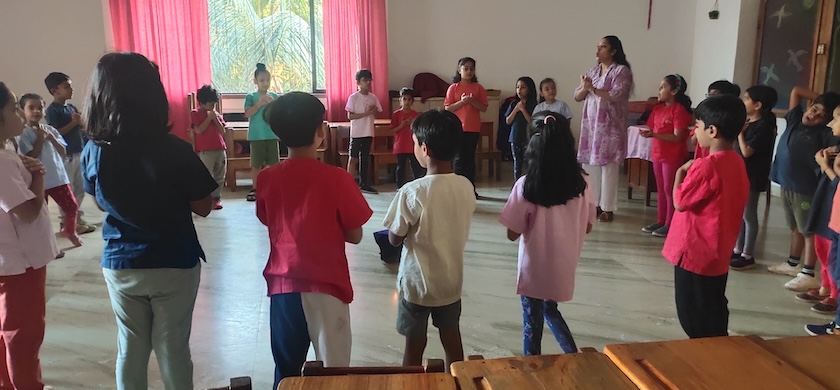
Making of a circle - Teachers would first lay a broad outline of what they want to bring to the children. Later it was fine tuned with details and a sequential flow. As children learn through imitation, we as teachers would grow organically into every circle and be thorough with every gesture and word. A lot of thought went into the gesture that would be apt with the verse, at times adding our own individuality to it.
My firsthand experience with circle time was a virtual one, as the kindergarten was adapted online, due to lockdown. It was hard to gather the children and help them relate to the essence of the circle. I would gather them by singing, who will come into our wee ring and make it a little bit bigger. I personally took the names of every child, so they felt a part of the circle. It was different, a little impersonal. But when school re-opened, it was a different story altogether. I still remember when I first did the three little pigs circle with my children. It gave me goosebumps as their tiny feet and hands moved with me. We stomped, marched, huffed and puffed all in unison. I saw some engaged, some in awe, heard them hum the melody and remember every word of it very soon. It really warmed my heart as it felt so alive! Circle time was always fulfilling, for they would attempt to mimic/imitate every gesture and sing the same way I did. One look into their eyes and it felt like they were totally immersed, imagining that they were tip-toeing in water, crossing a bridge or plucking mangoes. It always happened to end with a moment of stillness which brought a rare pause to the rhythm of our day..

This post has been authored by Shreya Shetty, Kindergarten Teacher at Tridha from 2019 to 2023, and a Tridha parent