

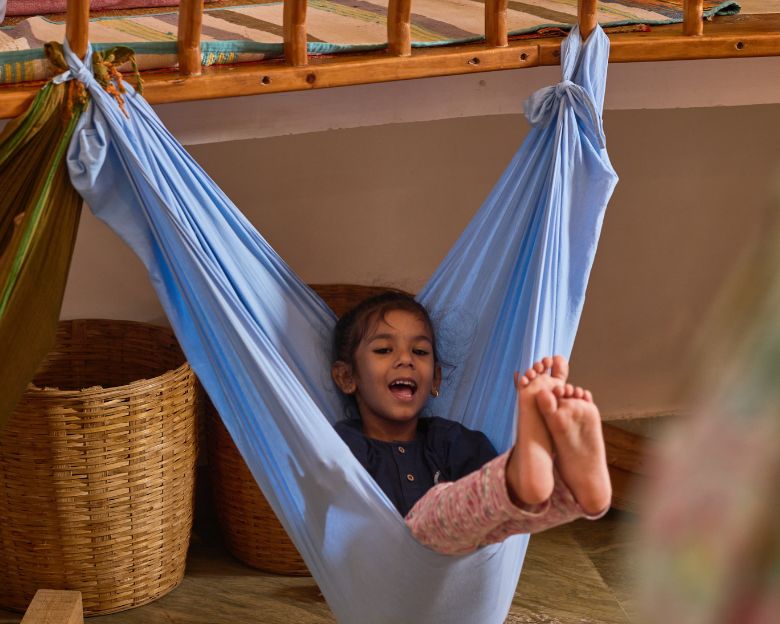
Bring Waldorf home
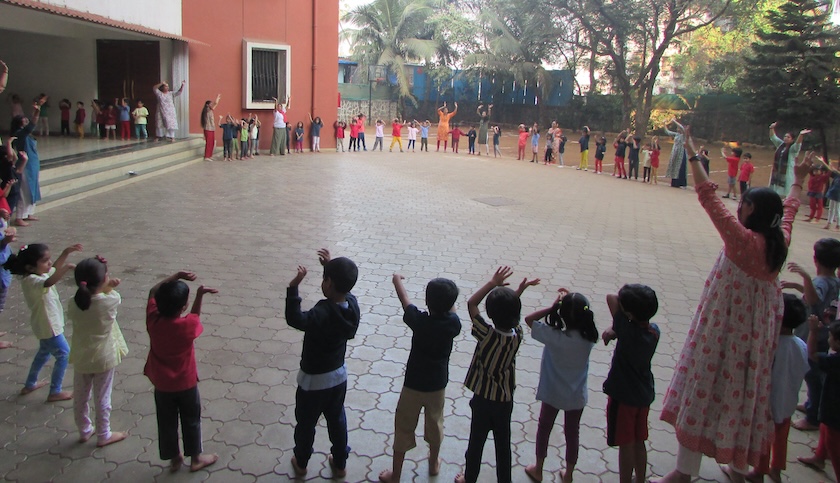
Each child, is a being that comes from the cosmic world and brings with him his soul and a spirit, with his physical body being provided by his parents. Each child incarnates with a definite purpose and plan, and it is our job as parents to give them a nourishing environment filled with love, patience, understanding and care to recognise and fulfil this purpose.
Throughout early childhood years, attending any class PTM in a Waldorf school will sound like a broken record, constantly drilling the 3R’s - Rhythm, Reverence and Repetition. And drag though it may seem; but when one practices and extends the philosophy of Steiner education beyond the school environment, and incorporates these approaches and principles into parenting and our homes, is when the child truly thrives and well-rounded benefits are witnessed leading to a largely peaceful and happy parenting and a well-balanced and grounded child.
So what exactly is Steiner education? What are the principles followed in Waldorf Schools?
Steiner Education is an education system based on the Philosophy of ‘Rudolf Steiner’ where a child is treated as a whole being and the focus of development; unlike conventional methods, is not limited to the head i.e. intellect alone, but equal and perhaps greater emphasis is given on developing a physical, emotional and spiritually holistic child. Educating creative problem solvers is at the heart of Waldorf schools around the world.
It lays emphasis on:
Rhythm and Repetition
Following daily, weekly, monthly and seasonal Rhythms. Following a rhythm is different from having a fixed and rigid routine. It allows, like a heartbeat, ups and down, a pause and relaxing time in-between high level activities such as study, play, school etc. A daily rhythm helps the child feel secure by enabling him to know what is coming next and soon the child begins to recognise and identify his/her biological clock click right on time for the next flow of activity of the day/ week/month etc. This leads to healthy play, regular meal times & rest and thereby helps in keeping chaos at bay.
Reduced/ Limiting screen time (Television Sets, Mobiles, Tablets, Video Games etc)
Making a conscious choice of keeping, what has become the “free nanny” of today's times, away; is a difficult yet a much required choice to make. Yes, it may sound very convenient to position the child in front of the screen because that provides parents with a much required break from running behind and catering to the child’s entertainment and also aids in buying much needed time in dealing with tasks, chores, commitments etc.
However,
- Had rhythm and routine been established, we wouldn’t really need to run around the child to the extent described above.
- The main question we need to ask is, whether screen-time of any sorts is really required and beneficial for a child? The answer being that it is more for parents than for children if we look and think about it carefully.
- Research into the constant movement frame changes on screens and the ever increasing screen refresh rates in recent times, has proven a direct connection between children watching modern videos to their brains being overstimulated and hence leading to hyperactivity/ ADHD etc.
- Can we really filter what is seen and shown and not have its impacts on an ever impressionable mind? It’s something one needs to pause and reflect upon.
How then must we kill their boredom you may ask. LET THEM GET BORED, for when they do, will you witness the magic unfold. The child will soon start imitating those closest to him, sometimes role-playing the mother, father, grandparents, teachers, doctors etc. I distinctly remember a child in the family being so impressed with the stock/ store room in the shoe shop, that he kept looking at the ceiling, clapping his hands and muttering what he had heard and then gathering shoe boxes because he wanted to grow up to own a shoe shop. (Traditional shoes only shops have a loft/ cellar in their ceilings for storage of shoes)
When you feel they are bored at home, give them some real utensils, the ones we use in our kitchens and not toy ones, and a few mixed dried beans and lentils – rajma, vatana, chole, chana etc. (age permitting of course) and watch them lost and engrossed in either segregating them or pouring them from one bowl into another for hours together. You will be amazed at how a handful of daily kitchen items becomes the cynosure of their eyes and how they seem to be mesmerised with whatever it is they choose to do with these.
When a mother’s dupatta or father’s trouser belt becomes the shed and collar respectively of their imaginary pet animal, it is nothing short of pure joy and entertainment.
Free, Imaginative, Unstructured and Outdoor Play
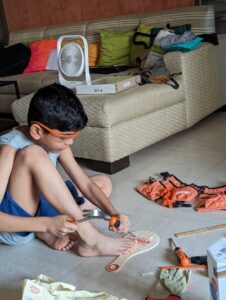
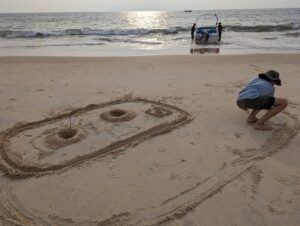
The amount children benefit from free play and being outdoors needs to be magnified and delivered to every parent, without fail. With open-ended freeplay and non-adult imposed rules, children learn to explore and recognise their interests, vent their creativity, learn about respect and boundaries and life-skills required to live, exist, thrive and survive. It is amazing when a pine cone becomes a tree one day, an aeroplane the next, a train the third and so on, as compared to a ready-made specific toy. For example. An aeroplane (plastic, metal or wooden) cannot become a train, its purpose is pre-defined and limited. Their creative imagination is curbed, vision is limited and after a few hours/ days of play, the aeroplane sits quietly and newer toys get piled up in the house. For the same reason and more, Steiner philosophy emphasises on the use of natural and freely available material, like, sticks, wooden beads, flowers, coconut shells, feathers etc. In this way, with boredom at bay, creative juices begin to flow in the child’s brain and one learns to respect and revere nature. When a stone gets cared for, when the wonder of the sea is seen in a seashell and when flowers get spoken to with real life feelings, life slowly begins to teach children and through them, their parents, that the world is beautiful and it takes a lot of nurturing and caring to receive from and give back to the universe all the gifts she bestows upon us.
Doing is believing and the way to learning
One can never learn by simply watching as it has to be followed by putting those observations into action, to know how far one has been able to grasp and if possible improve it by repeating the act. Can any of us imagine learning to drive or steer the wheel, simply by sitting in the passenger seat and observing the movement of the hands and legs??
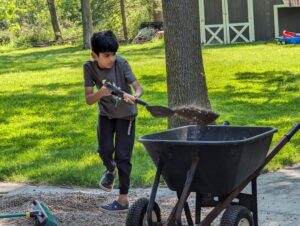
Children do learn a lot by observing and imitating, however, the bottom line is that they need to perform the action. One does not imitate day dreaming or sleeping, but one imitates daily chores, how we approach and interact with others, actions and gestures etc. Steiner education emphasises on allowing children to perform small tasks regularly thereby setting them up to be independent, disciplined and appreciate that no task, however trivial it may seem, whether at home or at work, is big or small, eventually instilling in them a sense of dignity and equality of labour. Involving children from a young age in tasks such as food preparation, dusting and sweeping around the house etc. makes them feel connected to their family and surroundings and keeps the feeling of entitlement away. They realise the value of labour and how important and difficult some of these seemingly simple tasks may be. Effort gets its due appreciation and with this new lesson, they learn to respect the strife and struggle of others and hold them in greater awe and understanding.
Overall, Steiner education, teaches a child the true meaning to be human. It helps them build a deeper connect within themselves and their surroundings. To view themselves as part of the system and also to identify that the whole system is within them. It also helps them in building a more meaningful relationship with others around them – people, animals and the world at large. Where else would you hear angelic voices every morning humming melodiously to the tune, “Blessings on the blossoms, blessings on the roots, Blessings on the leaves and trees, Blessings on the fruits!!” In due time, they understand what this tune and its words actually mean. If you just let them be and grow, you will witness, and I can attest to this, that they grow organically into; how beautifully the curriculum has been designed. They get all the they need to grow both physically and mentally, if we just place our trust in the system and follow the simplicity at home. If you can wait the wait and push the rush to grow, away, you will have a beautiful, innocent, pure and wonderful soul in your child and they will be a delight and will bring a sense of pride to you wherever they go. In a world where none of us like to see children speak like adults or act like them, can we understand and care enough to elongate their childhood so they can just be little children a little while longer? If so they will walk, arm and hammer, yet with their head, hands and heart, filled with wonder and respect toward everyone and everything, into a world that is constantly becoming otherwise. Can we achieve the above? Yes, we can! Do you care to trust the system and just hold yourselves back a little?
I would like to conclude with 3 quotes of Rudolf Steiner that sum it all up. Though they may be directed towards teachers, we mustn’t forget that as parents, we are their teachers too.
Where is the book in which the teacher can read about what teaching is? The children themselves are this book. We should not learn to teach out of any book other than the one lying open before us and consisting of the children themselves.
Our highest endeavour must be to develop free human beings who are able of themselves to impart purpose and direction to their lives.
The need for imagination, a sense of truth, and a feeling of responsibility- these three forces are the very nerve of education.
Here is a link that shows “Fast movement shows and their connection to children's brains being in overdrive.”
This post has been authored by Melissa Mendonca, a Tridha parent