A magical childhood, a Waldorf education
At Tridha, we follow the Waldorf method that focuses on developing all of the individual – mind, body and will. Our student-centric curriculum nurtures active learners and free thinkers rather than passive absorbers of information. This unique learning experience stems from a profound understanding of the human being.
The impact of a Tridha education is apparent in our students long after they graduate. Tridha graduates are uniquely equipped to think creatively, navigate complexity and find their unique purpose in life. We enable them to leave a positive impact on the world, no matter what path they choose.
The Waldorf Way
Developed by Rudolf Steiner, the Waldorf way is a distinctive approach to education that has been practised globally for over a 100 years. Today, there are 1,283 Waldorf schools and 1,922 Waldorf kindergartens across more than 71 countries
Waldorf graduates are well-rounded learners who gain admission to top universities and find success in diverse professions. We attribute these results to the method’s age-appropriate and holistic approach which introduces different subjects at the right time, based on children’s developmental stages.
An artistic element is at the essence of the Waldorf approach, which is rooted in anthroposophy, the study of the human being. The arts, handwork, music and sport are integral elements of this system, which prioritises experiential learning and engagement with the world beyond school walls.
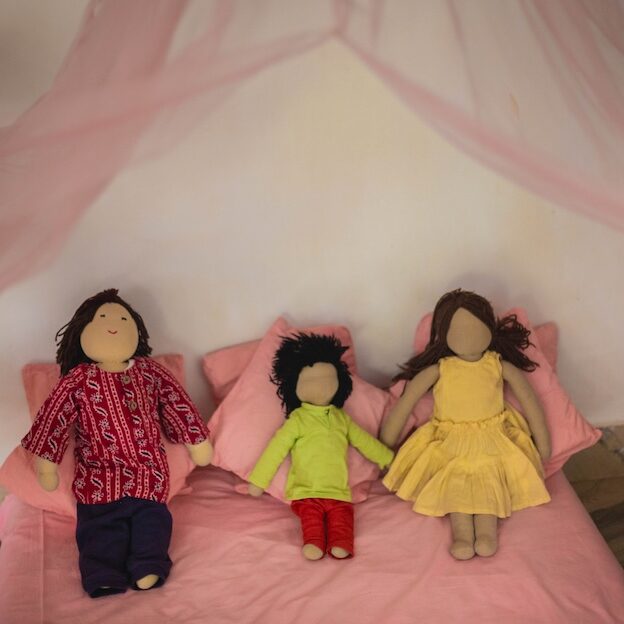
Why give your child a Waldorf education?
Tridha is a safe space for the holistic development of your child – head, heart and hands. In keeping with the Waldorf approach, we consciously nurture…
We prioritise practical skill, exploration, and imagination over rigid assessments and rankings.
Creativity, wonder and curiosity
Our staff recognise the individuality of each student and encourage unique journeys of personal growth.
All-round well-being
We foster collaboration between teachers, parents, students and the larger community to nurture a sense of belonging.
Community and relationships
Our wide-ranging and adaptive curriculum offers experiences and opportunities tailored to the diverse ages, stages, and needs of students. Subjects deemed extracurricular elsewhere—such as the arts, music, gardening, languages, movement, and self and social awareness—are integral and valued experiences at Tridha.
Interdisciplinary learning
We enable deep engagement in learning through a Main Lesson approach, in which three-week blocks of two-hour daily sessions allow focused study of one subject. Moreover, each day’s rhythm is thoughtfully crafted to balance activities that engage thinking, feeling, and action.
Rhythmic schedules and immersive study
Using a curriculum that mirrors the development of human consciousness through stories, myths, legends, history, and biographies, we address the needs of the whole child.
Pedagogy as an artistic practice
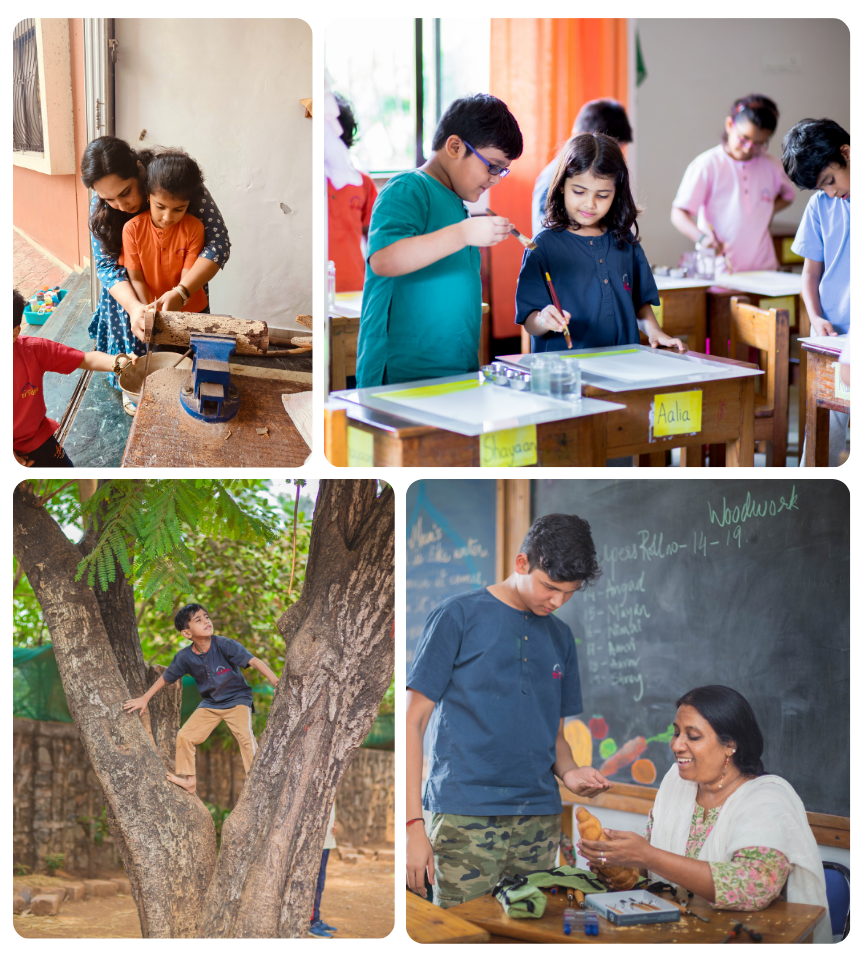
We emphasise real-world skills beyond the classroom. We encourage students to practically engage with, rather than merely learn about subjects.
Hands-on learning
Tridha students care deeply for their social and physical environments. A large part of our curriculum is rooted in ecological wisdom and an appreciation of nature. We honour the cycle of the seasons through festivals.
Responsible Stewardship
Our high-quality learning environments, both indoors and outdoors, support effective learning.
Aesthetic and functional beauty
Each day in Grade School begins with a cherished tradition: students and teachers come together in a circle, weaving together threads of movement, music and storytelling. This ritual, typically connected to the ongoing study block, sets the tone for the day’s activities.
Morning Circle
Creativity, wonder and curiosity
We prioritise practical skill, exploration, and imagination over rigid assessments and rankings.
All-round well-being
Our staff recognise the individuality of each student and encourage unique journeys of personal growth.
Community and relationships
We foster collaboration between teachers, parents, students and the larger community to nurture a sense of belonging.
Interdisciplinary learning
Our wide-ranging and adaptive curriculum offers experiences and opportunities tailored to the diverse ages, stages, and needs of students. Subjects deemed extracurricular elsewhere—such as the arts, music, gardening, languages, movement, and self and social awareness—are integral and valued experiences at Tridha.
Rhythmic schedules and immersive study
We enable deep engagement in learning through a Main Lesson approach, in which three-week blocks of two-hour daily sessions allow focused study of one subject. Moreover, each day’s rhythm is thoughtfully crafted to balance activities that engage thinking, feeling, and action.
Pedagogy as an artistic practice
Using a curriculum that mirrors the development of human consciousness through stories, myths, legends, history, and biographies, we address the needs of the whole child.
Hands-on learning
We emphasise real-world skills beyond the classroom. We encourage students to practically engage with, rather than merely learn about subjects.
Responsible Stewardship
Tridha students care deeply for their social and physical environments. A large part of our curriculum is rooted in ecological wisdom and an appreciation of nature. We honour the cycle of the seasons through festivals.
Aesthetic and functional beauty
Our high-quality learning environments, both indoors and outdoors, support effective learning.
Morning Circle
Each day in Grade School begins with a cherished tradition: students and teachers come together in a circle, weaving together threads of movement, music and storytelling. This ritual, typically connected to the ongoing study block, sets the tone for the day’s activities.
Curriculum Overview
The belief that education is an artistic process lies at the heart of Rudolf Steiner philosophy.
| Kindergarten | Seasonal festivals |
| Grades 1 - 3 | Fairy tales, folk tales, fables and legends, creation stories, nature stories, Ramayan |
| Grades 4 - 6 | Norse sagas, Mahabharata, Stories of ancient civilizations - Mesopotamian, Egyptian, Greek, Roman, ancient, early and medieval Indian history |
| Grades 7 - 8 | Renaissance and Age of Discovery, Age of Revolution (including French, American and Industrial), Medieval India, Civics |
| Grades 9 - 10 | World War I and II, Cold War, International politics in the 20th century |
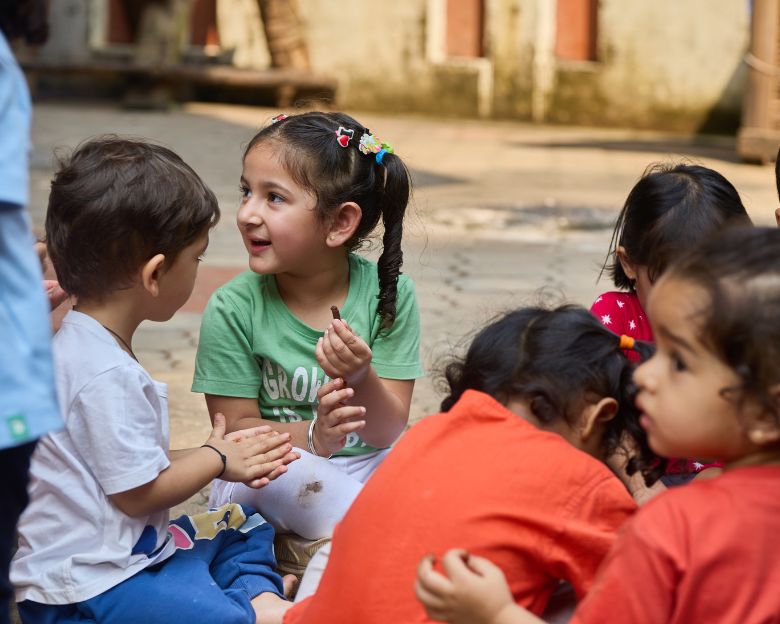
Early Years
As your little one takes their first steps into the world, we offer them a safe, magical and nurturing sanctuary for learning and play.

Primary School
The beginning of your child’s educational journey, marked by wonder, play and an age-appropriate curriculum.

High School
We support our students, already on the path to becoming talented young individuals, with an environment where they can pursue their curiosities and learn about the world.
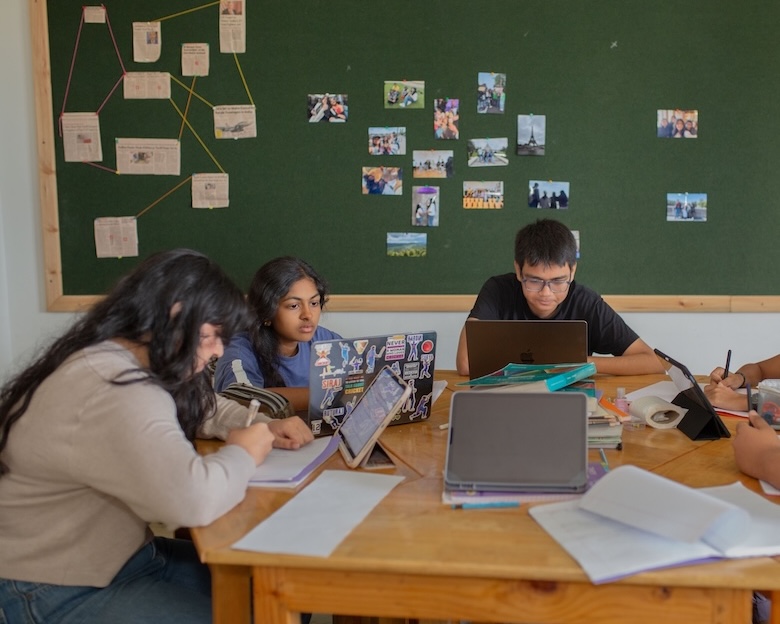
A Level Program
Simultaneous study and self-exploration so your child can navigate the complexity of the real world with courage and confidence.