
A comparison between boards in India
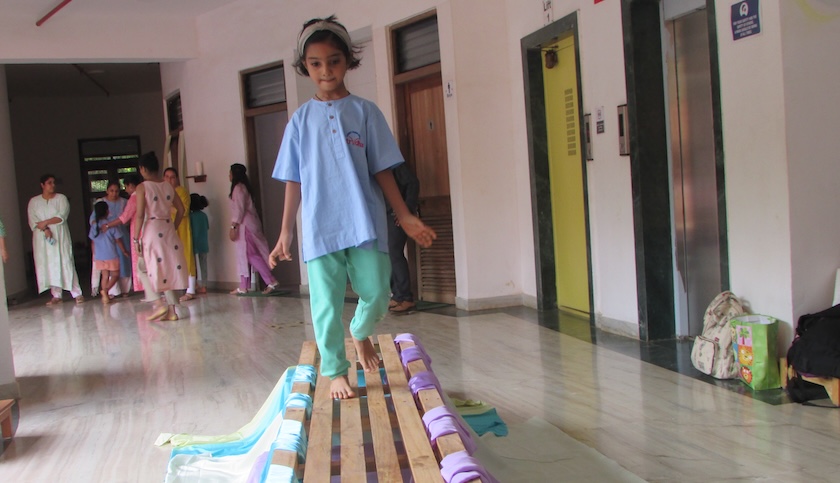
The Steiner curriculum from kindergarten to grade 12 addresses the aspects of the developmental pathway of humanity through history which informs and reflects the growth pathway of the child into adulthood. Emphasis is placed on the importance of a synchronised approach to the rhythms and patterns of the daily lessons, the school week and the yearly timetable, including the Main Lesson, the celebration of seasonal and cultural festivals, and the integration of the arts and sciences in a holistic and phenomenological approach to presenting knowledge in a sequenced way that balances cognitive, aesthetic and experiential learning.
Here are some key differences between Steiner education and other educational methods:
- Holistic Approach:
- Unlike conventional teaching methods, Steiner education adopts a more holistic approach. Teachers guide students through an integrated curriculum that combines academic, artistic, and practical activities. They stay with the same class for several years, fostering strong relationships and a deep understanding of each student’s development1.
- Emphasis on Creativity and Art:
- Steiner education is rich in creativity, art, and music placing equal emphasis on these creative activities along with academics. Montessori classrooms encourage imagination via hands-on activities, whereas Steiner schools emphasize storytelling and games2.
- Social Outlook and social Skills:
- Steiner schools put a strong emphasis on social outlook and social skills. The teaching method is based on a balance of intellectual, practical, and artistic teaching. This differs from mainstream education, which often focuses solely on academics3.
- Individual Autonomy for Teachers:
- In Steiner education, individual teachers have a great deal of autonomy in curriculum content, teaching methods, and governance. This allows for flexibility and adaptation to the unique needs of each class and student1.
- Limited Standardised Testing:
- Qualitative assessments of student work are integrated into the daily life of the classroom, with standardised testing limited to what is required to enter post-secondary education. This contrasts with many traditional educational systems that heavily rely on standardized testing1.
- Anthroposophical Influence:
- Steiner education is deeply influenced by anthroposophy, a movement founded by Rudolf Steiner. Concepts such as reincarnation, karma, and the existence of spiritual beings play a central role in the pedagogy of Waldorf schools1.
In summary, Steiner education stands out for its holistic approach, emphasis on creativity, and incorporation of social outlook, making it distinct from other educational methods. However, it’s essential to recognize that each educational approach has its strengths and limitations, and what works best for a child may vary based on individual needs and preferences4.
To create a point of reference for higher grades, given below is a brief overview of the boards in India:
International General Certificate of Secondary Education (IGCSE): IGCSE is an internationally recognised curriculum developed by Cambridge Assessment International Education. It offers a broader range of subjects and a more flexible curriculum, allowing students to tailor their education to their interests and strengths. The Cambridge IGCSE emphasises skill development, practical application of knowledge, and a global perspective. Students are required to take a core set of subjects, including English, mathematics, and science, while also having the option to choose additional subjects based on their preferences.
Higher Secondary Certificate (HSC): Higher Secondary School Certificate or HSC is conducted by some of the state boards at the end of Grade 12 which makes students eligible for graduate courses. It has distinction of Arts, Science & Commerce streams. It places emphasis on vernacular subjects as well. English is compulsory.
Central Board of Secondary Education (CBSE): The Central Board of Secondary Education conducts the Class 10 exam and the Class 12 exam every year for those schools affiliated to the board. It is known for its comprehensive syllabus and well-structured exam pattern. English is compulsory.
Indian School Certificate Examination (ISC): The Indian School Certificate is an examination conducted by the Council for the Indian School Certificate Examinations for Class 12. The subjects of examination include English as a compulsory subject and a list of elective subjects. The list of electives contains subjects like Geography, Sociology, History, Physics, Biology, Chemistry, Home Science, etc. ISC Board is known to lay a lot of importance on literature and language.
National Institute of Open Schooling (NIOS): The National Institute of Open Schooling (NIOS) is a government organisation established to enable education to all segments of society. Its primary objective is to increase literacy across India and encourage flexible learning. NIOS is similar in scope to CBSE and ISC boards.
International Baccalaureate (IB) Diploma Programme (DP): The International Baccalaureate Diploma Programme (IBDP) is described as “a rigorous, off-the-shelf” curriculum. It provides interdisciplinary subject choices. The assessment is both internal and external.