


Cradle of the Early years – Part 2

The Child is practising life
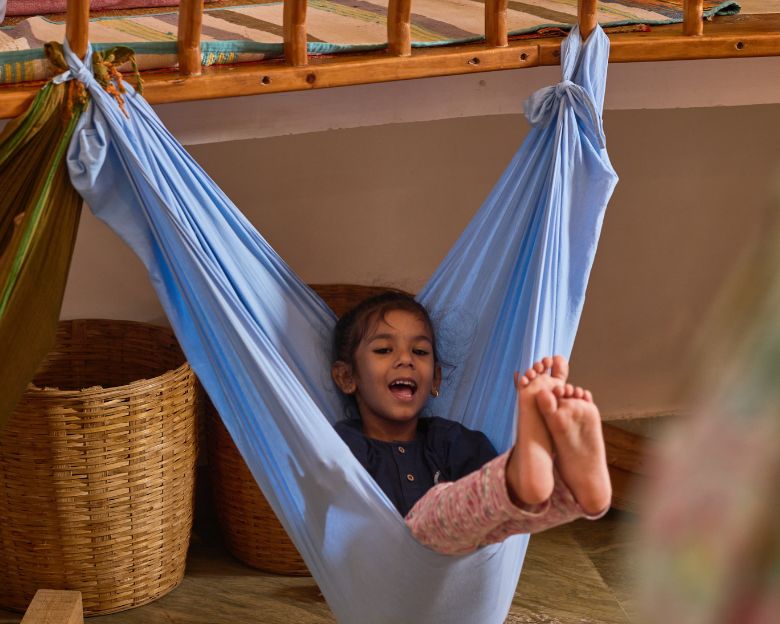
This is the activity that we refer to when we speak of the “play” of a young child. They need to express their imagination. They would rather do real things: wash dishes, cook, sweep the floor, play with a bowl or a spoon, sew, knit, carve with wood. They are in participatory consciousness and participate in the real-life work as per where they are in their development. This is also a time when children develop their “Will “and they are encouraged to build habits like tidying, orderliness. Most of the real work comes along through play.
Building deep takes time
During Play in the kindergarten, if one closely sees - it is 90% child and 10% toys. The kinder care is surrounded by materials and colours that elicit imaginative, creative play. All materials are open ended and aren’t rigid in their purpose or use. Open ended materials let the children guide their play. During a typical morning, shells would become money, wooden blocks become food, small tree branches, a telephone, cotton material, a skirt or a veil. For the adult eye the child may play using a stick or a stone, but for a child it means a lot.
What are they inwardly building?
In our experience we have observed that children don’t play unless they feel inwardly warm. Some may need a hug; some may need some kind of movement. Usually, kindergartens provide fruits or snacks only after a certain time or an activity. However, caregivers are watchful and observing children may lead to a different practice and offer to the child if they have not had their breakfast. It’s their Will force which is engaged in their play. Will forces at work during the age of earliest childhood shed like their sunlike radiance over the whole of life (page 92 Steiner lecture “The importance of Play in the first 3 years)
Steiner mentioned the dream-like consciousness that needs to be cultivated in early childhood and refers to it as a state of vivid imagination and receptivity to the world around them, where children naturally experience life through a more intuitive and sensory based lens just like how one experiences dreams while sleeping.
Life grows Here.
Ideally, we want a dreamy childhood, and it takes time for little ones to come into their own physical body. But times have changed. As the world shifts and changes around we rethink our priorities, but children universally are at the same stage of development. They will need to be given the time and a lot of space to be in the dreamy state. Many times, just tiptoeing around your child’s room and you see that the space is magical. Explore that magic.
The smell of bread making, water colour painting, the sight of natural play materials - as one steps into the kindergarten you’ll feel the difference. A lot of thought is given for tactile learning, social engagement and play in the kindergarten. In the early years, children benefit from a rich experiential foundation with little or no screen time or influence from digital media. The caregivers work in partnership with parents to reduce or limit media to model healthy habits around technology at home. Experiential learning through artistic activities, movement, music, lots of outdoor time helps children build essential cognitive, social emotional skills.
If one has to make a list of play materials, what can we offer that:
- Is natural and earth friendly?
- Is open ended to invite creativity and imagination?
- Invites the sense of touch?
- Is limited in quantity?
What about plastics?
It’s not that you can’t use plastic. It’s all about Balance. Children need exposure to different types of materials. At home too, we don’t have to throw away the plastic and replace them with expensive wooden ones. The kind of play that children elicit is important. We keep what meets the needs. We recognise that imagination and creativity need to develop to the fullest and to nurture them we provide ample time and opportunity for self-directed play. We use simple open-ended toys inviting the child to finish them with their imagination. What is taken care of is the quality of sensation that the materials provide as children are fine tuning their sense organs. Plastic may be used during water play or when children wash their dishes there are tubs, some plastic soap dishes. During sand and water play.
This post has been authored by Vidya Iyer, former Kindergarten Teacher and Coordinator