


Trusting the Learning Journey: Why Tridha Discourages Tuition
In a time when after-school classes and private tuition have become almost routine, many parents understandably wonder whether their child might “fall behind” without extra academic support. This concern often surfaces during Parent–Teacher Meetings, especially when families begin comparing learning paths and outcomes.
At Tridha, however, the approach to education in the primary years is intentional, research-based, and deeply rooted in trust—both in the child and in the learning process itself. For this reason, the school strongly discourages external tuition for students from Grades 1 to 6.
Why Tuition Can Disrupt the Learning Process
While tuition may appear helpful on the surface, it can unintentionally interfere with a child’s educational journey. One of the primary concerns is that tuition classes often promote shortcut methods and exam-oriented strategies. These methods may deliver quick answers but can undermine deep, conceptual, and feeling-based understanding.
Tridha’s approach is organic and understanding-based. It values curiosity, reflection, and gradual internalisation of concepts. When students are exposed to parallel methods outside school, they may begin to prefer speed over depth, leading to disengagement from classroom processes that are carefully designed for long-term growth.
A Deliberate Choice: No Exams or Textbooks in Primary Grades
Unlike many conventional schools, Tridha does not rely on formal exams or textbooks in the primary years. This is not an omission, but a conscious pedagogical choice. The early grades focus on building strong foundations—confidence, comprehension, imagination, and independent thinking.
It is natural for parents to feel anxious without the familiar markers of tests and textbooks. Questions about coping in higher grades may arise. However, the school’s philosophy rests on strengthening a child’s inner capacity to learn rather than training them to perform.
Over the years, this trust-based method has proven effective. Many Tridha students have achieved A and A* results in high school without any reliance on tuition, demonstrating that a strong foundation in the early years translates into academic success later.
Building Self-Study Habits from the Ground Up
The learning journey at Tridha follows a clear progression:
- In Grades 1 to 4, the teacher presents and guides the learning process.
- Gradually, students begin to take ownership.
- By Grades 5 and 6, self-study becomes a natural habit.
Self-study skills are essential for lifelong success. They empower students to take charge of their own learning, develop discipline, and cultivate independence. When children and parents remain committed to this method, tutoring—even in high school—becomes unnecessary.
The No-Homework Policy: What It Really Means
Up to Grade 3, Tridha follows a no-homework policy. This does not mean that learning ends at the school gate. Instead, it shifts the nature of home engagement from written assignments to meaningful parental involvement.
In fact, Tridha emphasises that parents play an equal—if not greater—role in holistic education.
From Grade 1 onward, parents are expected to:
- Go through the Main Lesson Book with their child every weekend.
- Encourage the child to describe, narrate, and explain what is represented in their drawings and written work.
The Main Lesson Book: A Child-Created Textbook
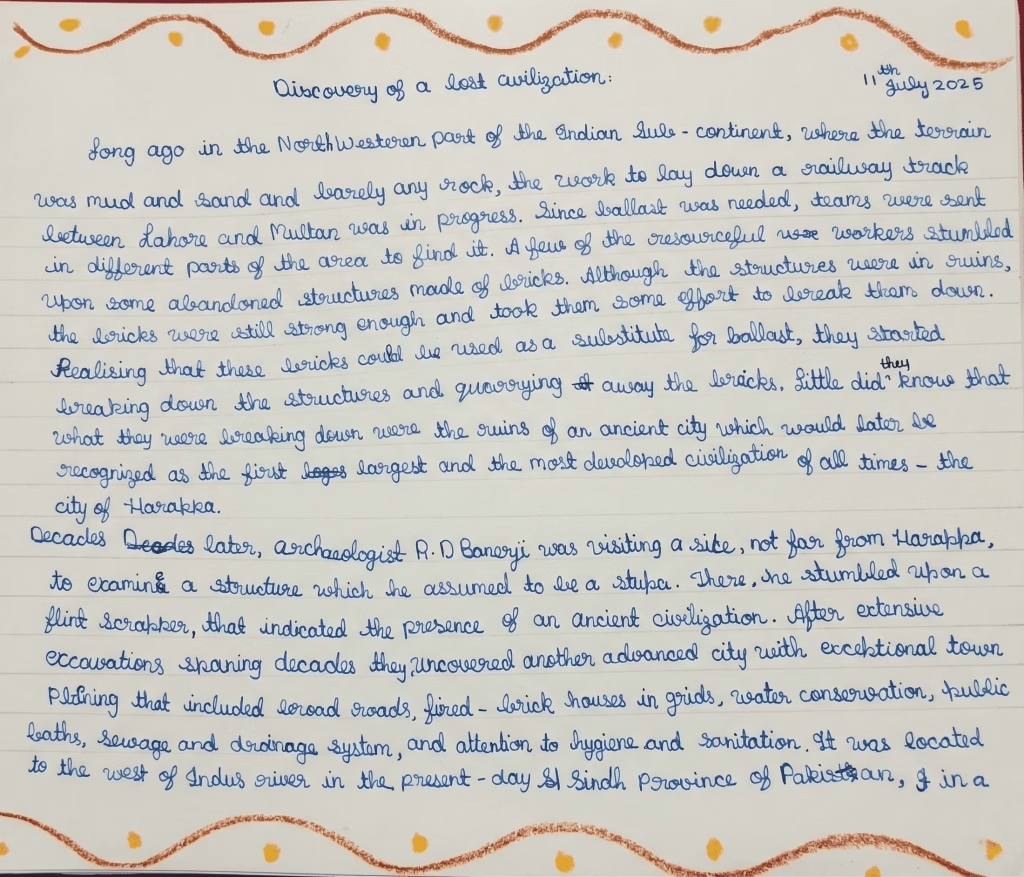
The Main Lesson Book is central to Tridha’s pedagogy. It serves as the child’s own textbook, created with the teacher’s guidance. It reflects the progression of concepts learned in class in a child-friendly format.
Parents need not introduce external methods or alternative strategies. Instead, they can rely on what is documented in the Main Lesson Book. For example, in Mathematics, asking “Why did you take this step?” helps the child articulate understanding. If a child struggles to explain, parents can guide gently or reach out to the class teacher for support.
This collaborative process allows parents to assess learning meaningfully without creating pressure.
Understanding the “Sleep-Over” Period
Learning is not always immediate. Children often require a “sleep-over” period—days or even months—before concepts fully settle. Patience is essential. Through regular weekend engagement, parents gradually identify what needs immediate attention and what simply needs time.
Trust in the teacher’s process and patience with the child’s pace are critical for building confidence.
Homework Expectations in Higher Primary Grades
For parents of Grades 1, 2, and 3, it is helpful to understand the progression of homework in later years:
- Grade 4:
- 20 minutes of Math and 20 minutes of Language homework, at least three times a week
- Hindi and Marathi homework in addition
- Daily recorder practice on weekdays
- 20 minutes of Math and 20 minutes of Language homework, at least three times a week
- Grade 5:
- 30 minutes of Math and 30 minutes of Language homework, four to five times a week
- Hindi and Marathi homework in addition
- Daily recorder practice on weekdays
- 30 minutes of Math and 30 minutes of Language homework, four to five times a week
- Grade 6:
- 40 minutes of Math and 40 minutes of Language homework, four to five times a week
- Hindi and Marathi homework in addition
- Daily recorder practice on weekdays
- 40 minutes of Math and 40 minutes of Language homework, four to five times a week
This gradual increase ensures that students are steadily prepared for higher academic demands without being overwhelmed in the early years.
A Shared Responsibility
If parents ever feel that their child is lagging in any subject, the first step should be to contact the class teacher or subject teacher through the school’s official email. The school takes full responsibility for each child’s education. In cases where extraordinary academic support is genuinely required, the school itself will recommend structured intervention after school hours.
External tuition is not recommended because it disrupts alignment between school and home. When parents and teachers remain united in approach, the child feels secure and supported.
Protecting Meaningful Learning
Education is not a race. It is a carefully nurtured journey. When families resist the pressure to compare and instead focus on understanding rather than speed, children develop confidence, depth, and resilience.
Placing trust in the Tridha pedagogy—and in the child’s natural capacity to learn—creates a powerful partnership between school and home. And it is this partnership that ultimately enables children to thrive, not just academically, but as independent, self-motivated learners for life.